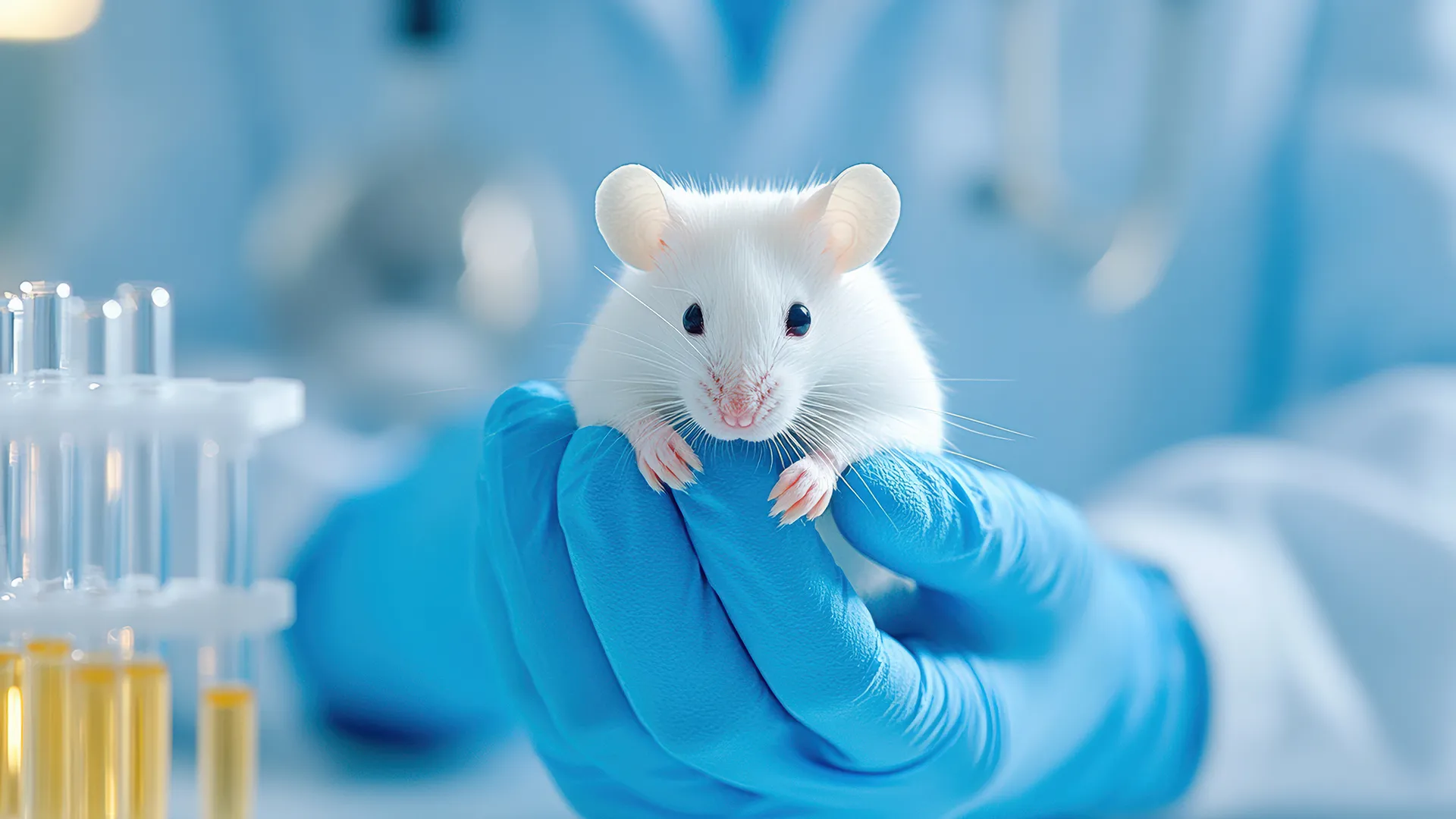
Animal in vivo models
Reliable and Translational Insights – Our validated and innovative animal models provide highly predictive data, bridging the gap between preclinical research and human relevance.
Ethical and Refined Approaches – We prioritize the 3Rs principles (Replacement, Reduction, Refinement) by integrating New Alternative Methodologies (NAMs) and optimizing study designs for robust yet ethical research.
Adapted to Your Needs – With a diverse portfolio of models, including standard and customized solutions, we support tailored study designs to meet specific regulatory and scientific objectives across various industries.
Studies in mouse
Mice are a cornerstone of preclinical studies due to their genetic similarity to humans and well-established use in toxicology, pharmacology, and efficacy testing. Their small size, rapid reproduction, and well-documented biology make them ideal for high-throughput testing, genetic studies, and disease model creation, especially in oncology and immunology.
Immunodeficient strains of mice could be used for ATMP non clinical development for toxicity/biodistribution studies and tumorigenicity for cell therapy.
- Single dose and dose range finding
- Repeated dose toxicity
- Safety pharmacology: respiratory function by whole body plethysmography, CNS (Irwin test)
Administration routes: oral, intravenous , subcutaneous, intramuscular, intranasal, intrathecal
Studies in rat
Rats are essential in preclinical studies due to their established role in safety pharmacology, toxicology, and drug development. Their versatility in modeling diseases such as diabetes, hypertension, and neurological disorders, along with their relatively larger size compared to mice, makes them ideal for a variety of in vivo studies.
Immunodeficient strains of rats could be used for ATMP non clinical development for toxicity/biodistribution studies.
- Single dose and dose range finding
- Repeated dose toxicity
- Juvenile repeated toxicity study
- Reproductive toxicology studies
- Safety pharmacology: respiratory function by whole body plethysmography or jacket telemetry, CNS (Irwin test)
Administration routes: oral gavage, diet, dermal, intravenous by bolus or infusion (with or without catheterization) , subcutaneous, intramuscular , intranasal, intratracheal, intradermal, intrathecal, intracerebral, intra-articular and intravesical.
Studies in rabbit
Rabbits are commonly used for ocular, dermal, and reproductive toxicology testing due to their sensitivity to environmental irritants. Their larger size compared to rodents makes them more suitable for studies involving injectable formulations and surgical procedures. They are also used in vaccine development and immune system testing.
- Single dose and dose range finding
- Repeated dose toxicity
- Reproductive toxicology
- Administration routes: oral gavage, dermal, subcutaneous, intramuscular , intra-articular, ocular and intravitreal (at an appropriate dose regimen)
Studies in dog
Dogs, especially Beagle dogs, are used in chronic toxicity studies due to their size and well-documented response to pharmaceutical compounds. Their use is crucial in evaluating cardiovascular, neurological, and metabolic disorders, as well as in studies of drug safety for human therapeutics.
- Dose range finding study
- Repeated dose toxicity
- Safety pharmacology: telemetry (implanted transmitter or jacket)
- Administration routes: oral gavage, capsules, diet, intravenous by bolus or infusion (with or without catheterization), subcutaneous, dermal, ocular, intramuscular, intranasal and intraperitoneal , intrathecal (cisterna magna or lumbar area), intracerebral, intravesical, intratracheal, intranasal, intra-articular.
Studies in minipig
Minipigs are an excellent model for assessing the safety and efficacy of drugs and medical devices, particularly in cardiovascular, dermatological, and surgical research. Their similar skin structure to humans makes them invaluable for dermatological studies, while their physiological similarity to humans aids in predictive toxicology.
- Dose range finding study
- Repeated dose toxicity
- Wound healing
- Safety pharmacology: telemetry (implanted transmitter or jacket)
Administration routes: oral gavage, capsules, diet, intravenous bolus and infusion (with or without catheterization), subcutaneous, dermal, ocular, intravitreal, intramuscular, intradermal (open, semi-occlusive and occlusive methods), intra-articular, intravesical, intratracheal, and intranasal.
Studies in marmoset
Marmosets, a smaller primate species, are increasingly used in toxicology and drug development studies due to their similarity to human cognitive function and immune response. Their small size, coupled with their use in neuroscience, infectious disease, and vaccine research, provides critical data for human health studies.
- Dose range finding study
- Repeated dose toxicity ()
- Safety pharmacology: telemetry (implanted transmitter or jacket)
Administration routes: oral gavage, intravenous by bolus or infusion (with or without catherization) , subcutaneous, ocular and intramuscular
Studies in cynomolgus monkey
The cynomolgus monkey is a non-human primate often chosen for its similarity to human physiology, especially in immunology and pharmacokinetics studies. Their use is crucial in testing drug safety, efficacy, and toxicity, particularly for new therapies targeting complex human diseases such as cancer and infectious diseases.
- Dose range finding study
- Repeated dose toxicity ()
- Safety pharmacology: telemetry (implanted transmitter or jacket)
Administration routes: oral gavage, intravenous by bolus or infusion (catheterization), subcutaneous, ocular, intravitreal, subretinal, intranasal, intrathecal (cisterna magna, lumbar area), intracerebral and intramuscular.
Studies in hamster:
Hamsters are often utilized in cancer research, infectious disease studies, and toxicology assessments. Their unique metabolic pathways and susceptibility to certain diseases make them valuable for evaluating the safety and efficacy of new drugs, especially in oncology and virology research.
Studies in ferret:
Ferrets are often used in studies of respiratory diseases, including influenza and COVID-19, due to their susceptibility to human respiratory pathogens. They are also valuable in pharmacology and immunology studies, particularly in evaluating antiviral drug efficacy and vaccine development. Their immune system response is similar to humans, making them ideal for these studies.